From yarn to garment.
Nine precise steps.
Every Active Knitwears garment passes through nine stages of quality-controlled manufacturing, all under one roof in Ludhiana.
Our process has been refined over five decades. We combine the accumulated hand-craft knowledge of three generations with German Stoll CMS knitting technology — giving clients the design flexibility of jacquard and intarsia, with the precision and repeatability of German engineering.
Everything happens on one floor. There is no outsourcing, no second workshop, no ambiguity about who is responsible for quality. If a garment leaves our premises, it has been through all nine steps — inspected at each one.
The nine steps
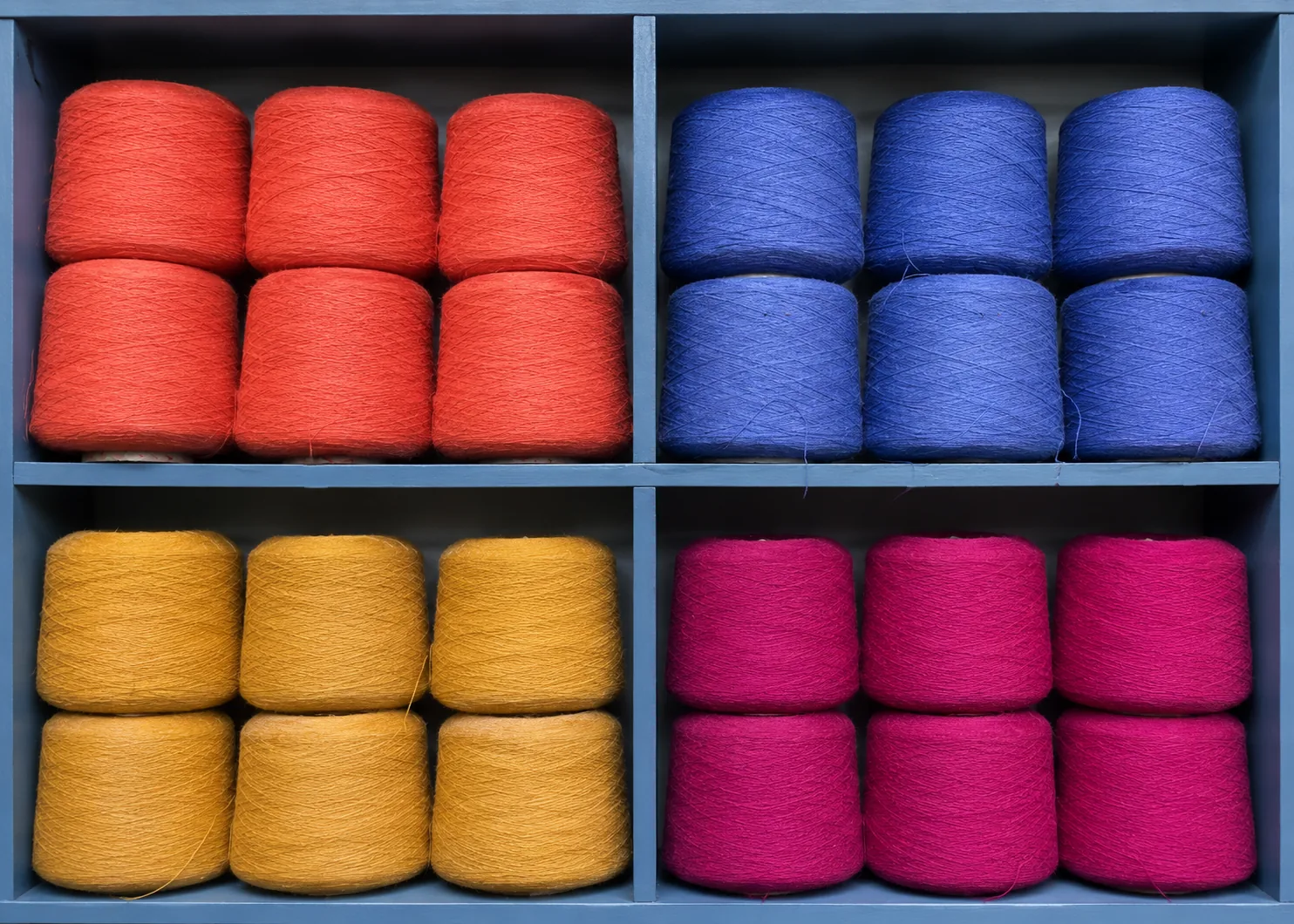
Yarn Selection
Every garment begins with yarn. We source from established spinners across Punjab, Rajasthan, and Himachal Pradesh — selecting for consistent count, twist, and dye-uptake. A garment is only as good as the yarn it begins with.
For clients with specific requirements — merino, acrylic blends, wool-poly mixes, or branded yarns — we source accordingly and provide a swatch for approval before proceeding to production.
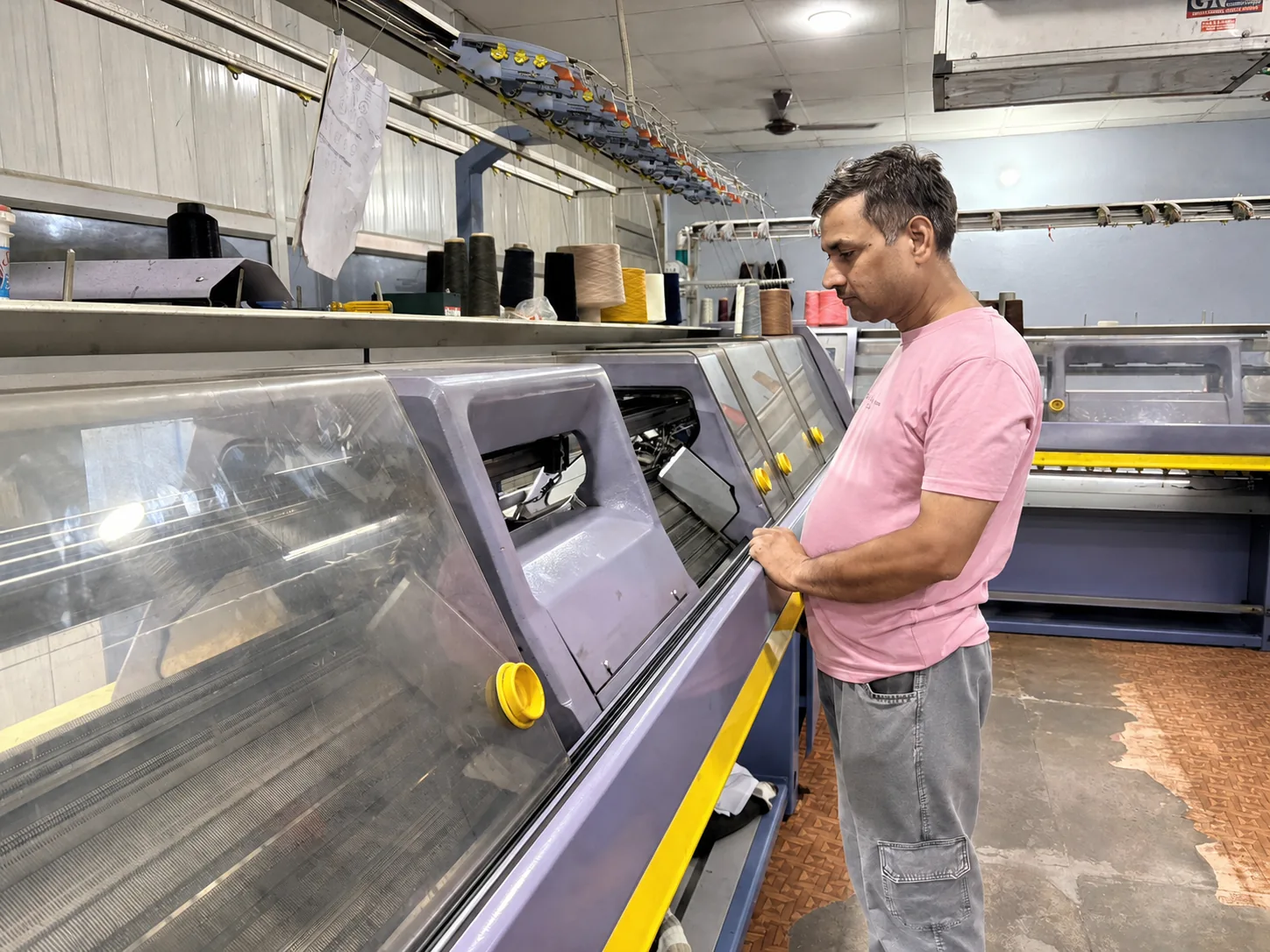
Knitting
We manufacture knitwear on German Stoll CMS, computerized flat, hand flat, and power flat knitting machines, offering production capabilities from 4GG to 14GG. From chunky winter knits to fine-gauge fashion garments, our expertise covers jacquards, intarsia, cables, textured structures, and fully fashioned knitting, ensuring flexibility, precision, and consistent quality across every production run.
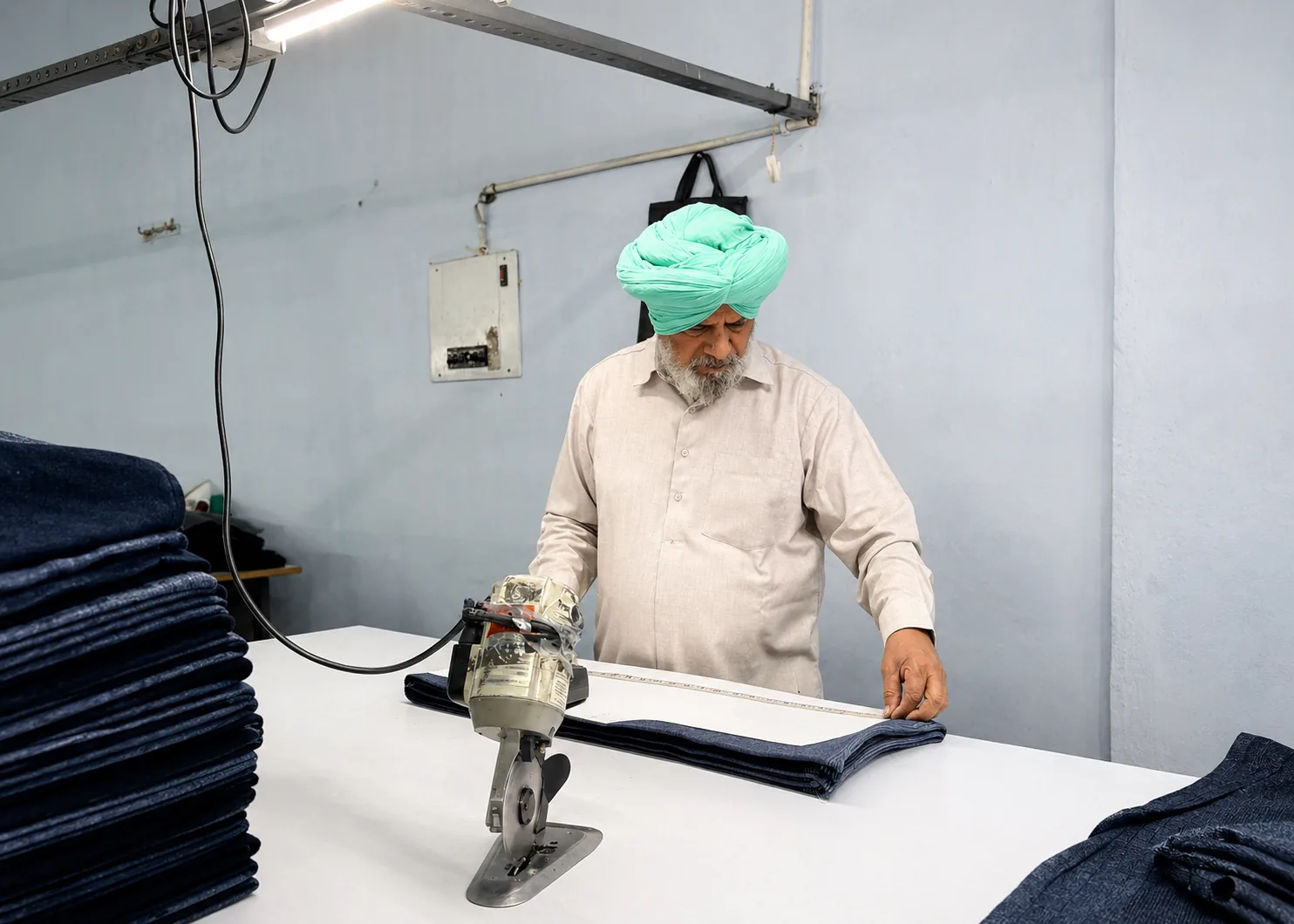
Cutting
Each knitted panel is precisely cut to pattern, ensuring consistent sizing and clean edges across every piece.
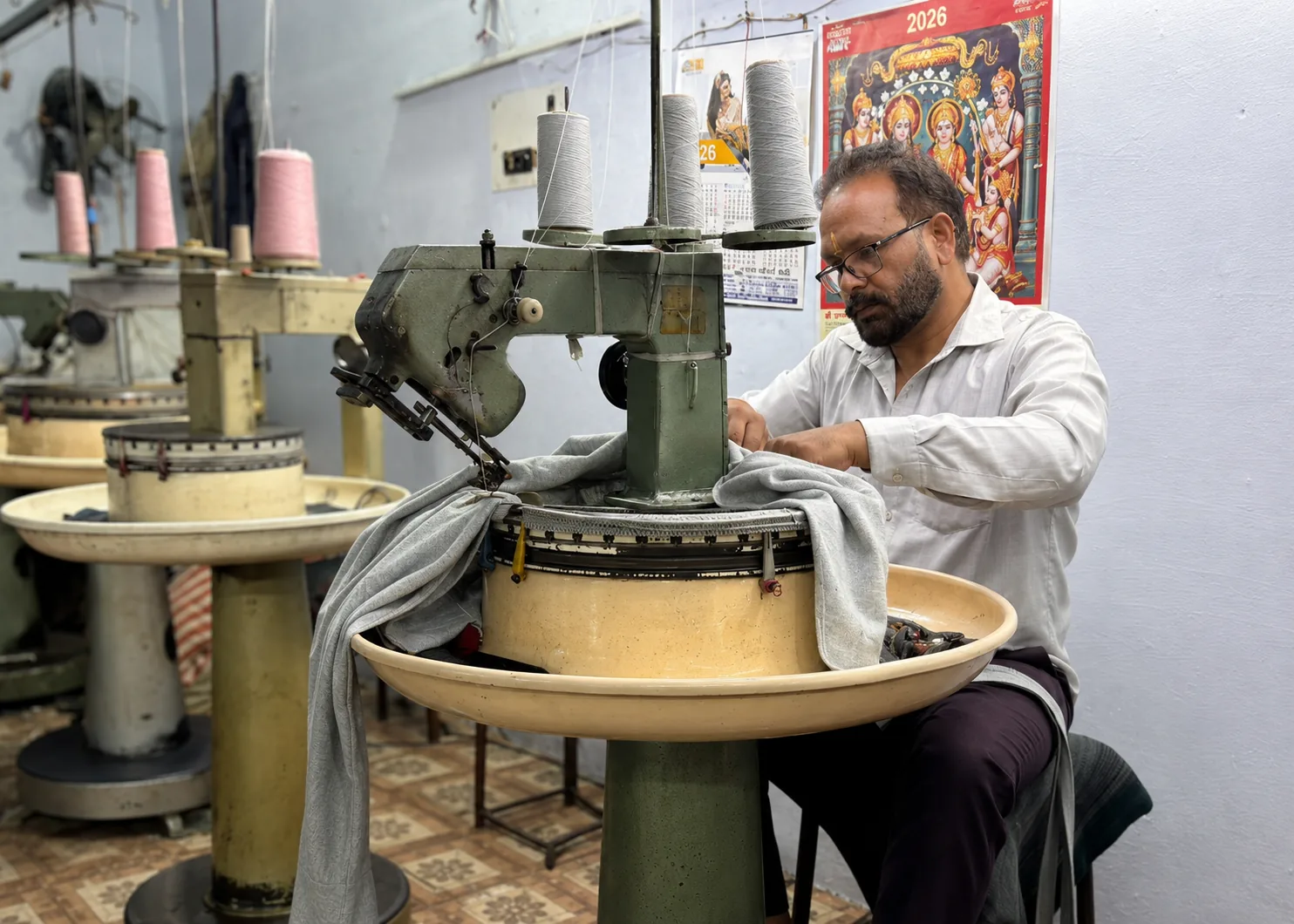
Linking
Individual knitted panels — front, back, sleeves — are joined using German and Indian linking machines. Linking creates an invisible join that is both strong and flexible, giving the finished garment its clean seam lines.
Skilled linkers work to tight tolerances. The linking stage is where structural integrity is set. A poorly linked garment will deform after washing; our linkers have been at this for years.
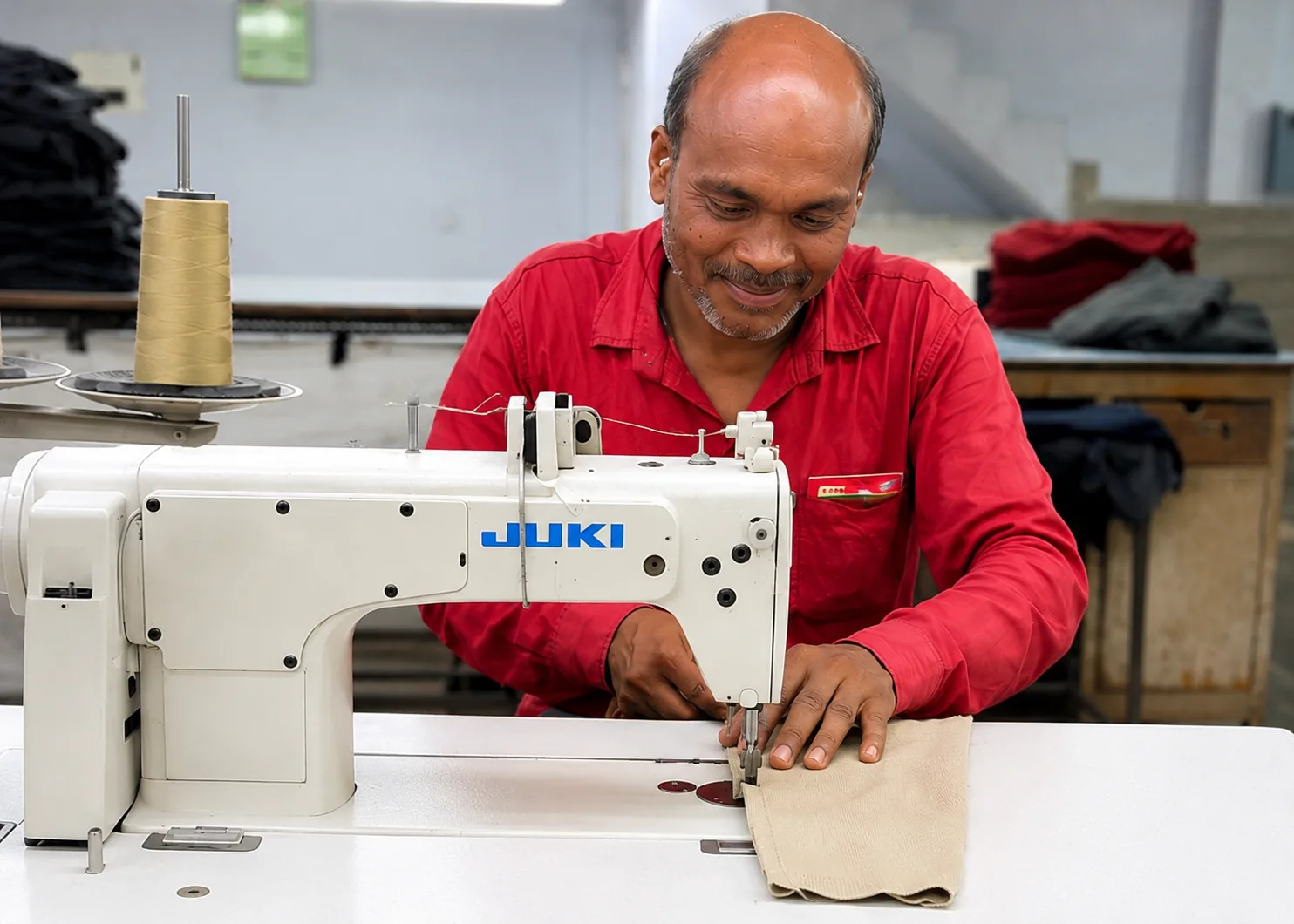
Sewing
Panels are expertly stitched together by skilled artisans, forming the complete garment structure.
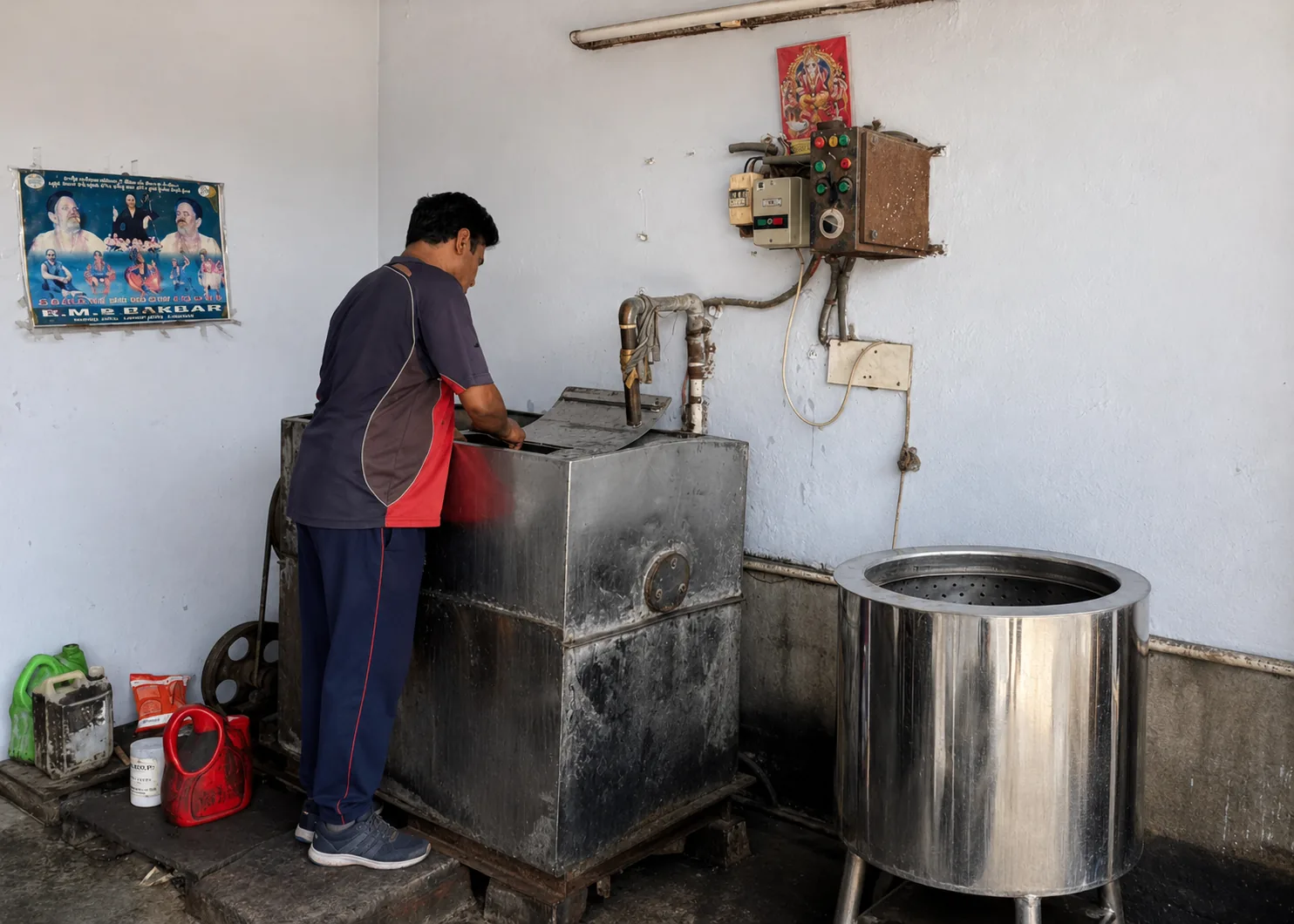
Washing
Garments are thoroughly washed to remove any residues, soften the fabric, and achieve the final hand-feel.
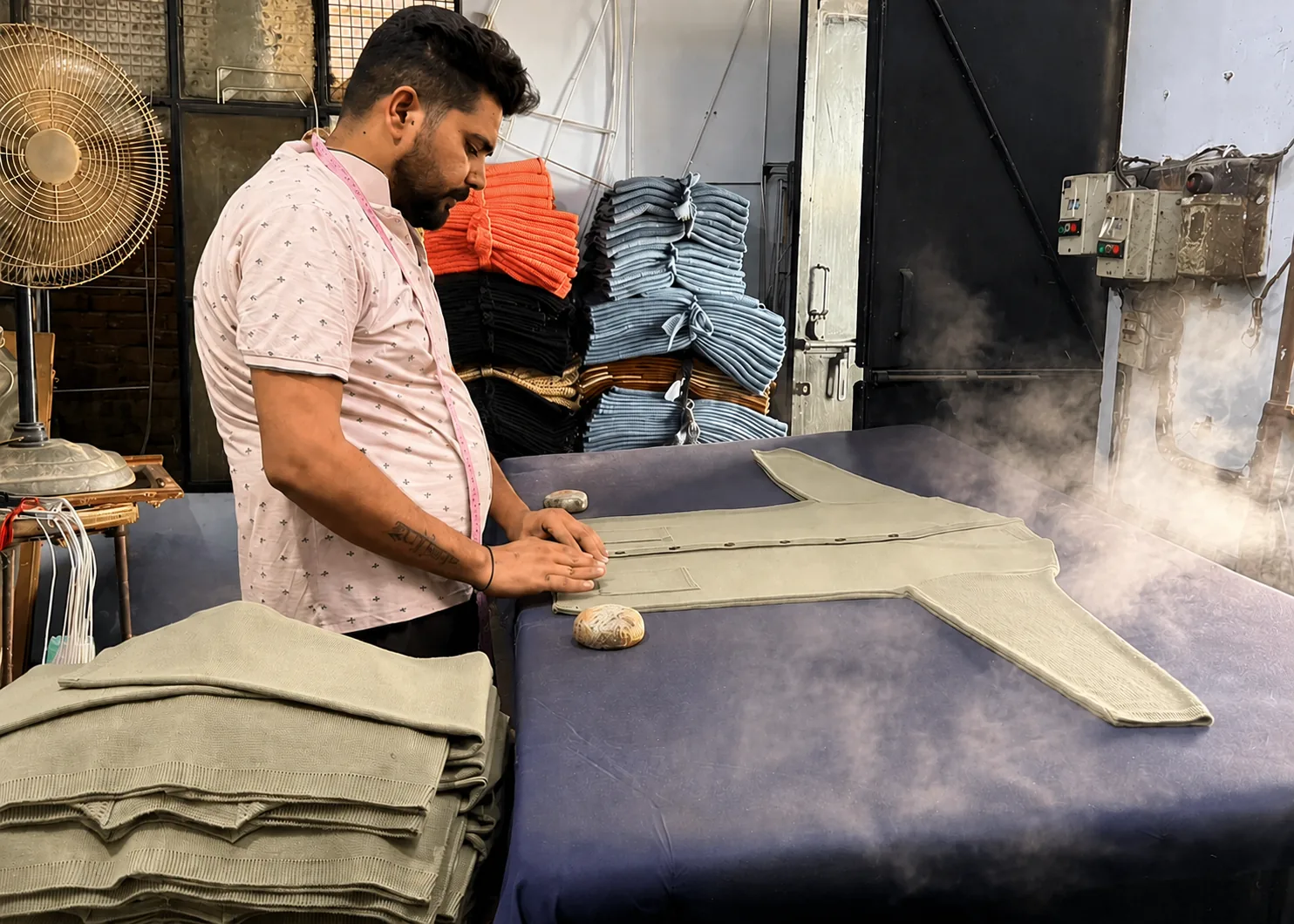
Pressing
After washing, each garment is steam-pressed. Steam pressing sets the dimensions — length, width, sleeve — and gives the fabric its final drape and hand-feel. Without pressing, even a well-knitted, well-linked garment will look unfinished.
We use Indian steam press machines calibrated to the specific yarn composition. Wool requires a different temperature and pressure than acrylic; our pressers adjust accordingly for every production run.
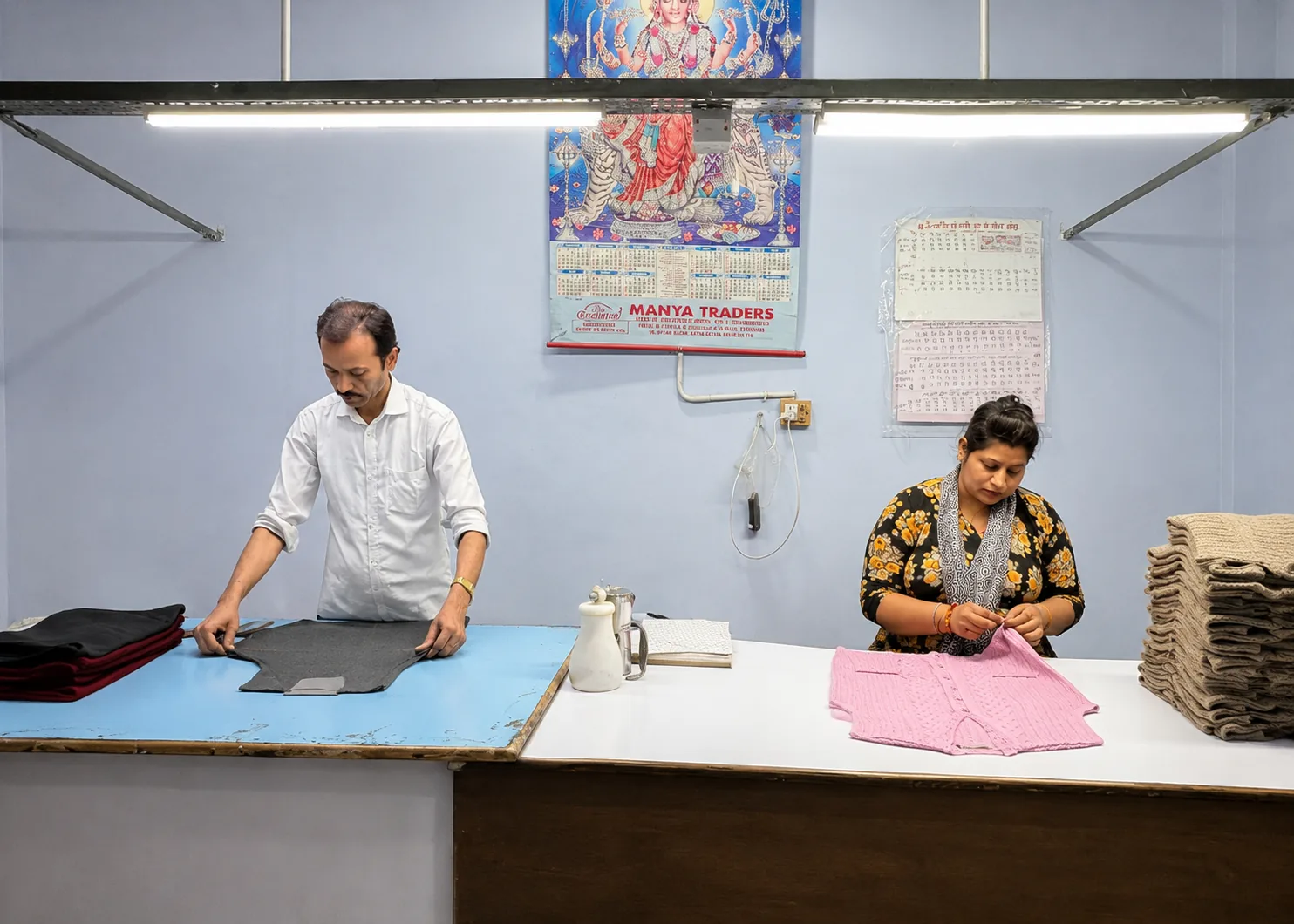
Finishing & Quality Control
Finishing covers button attachment, label sewing, thread trimming, and final visual inspection. Every garment is checked for dimensional consistency, stitch uniformity, colour accuracy, and any defects before it proceeds to packaging.
Defective pieces are flagged, re-worked if possible, or rejected. Our QC rejection rate drives continuous improvement at each preceding step — problems at QC surface root causes at knitting or linking.
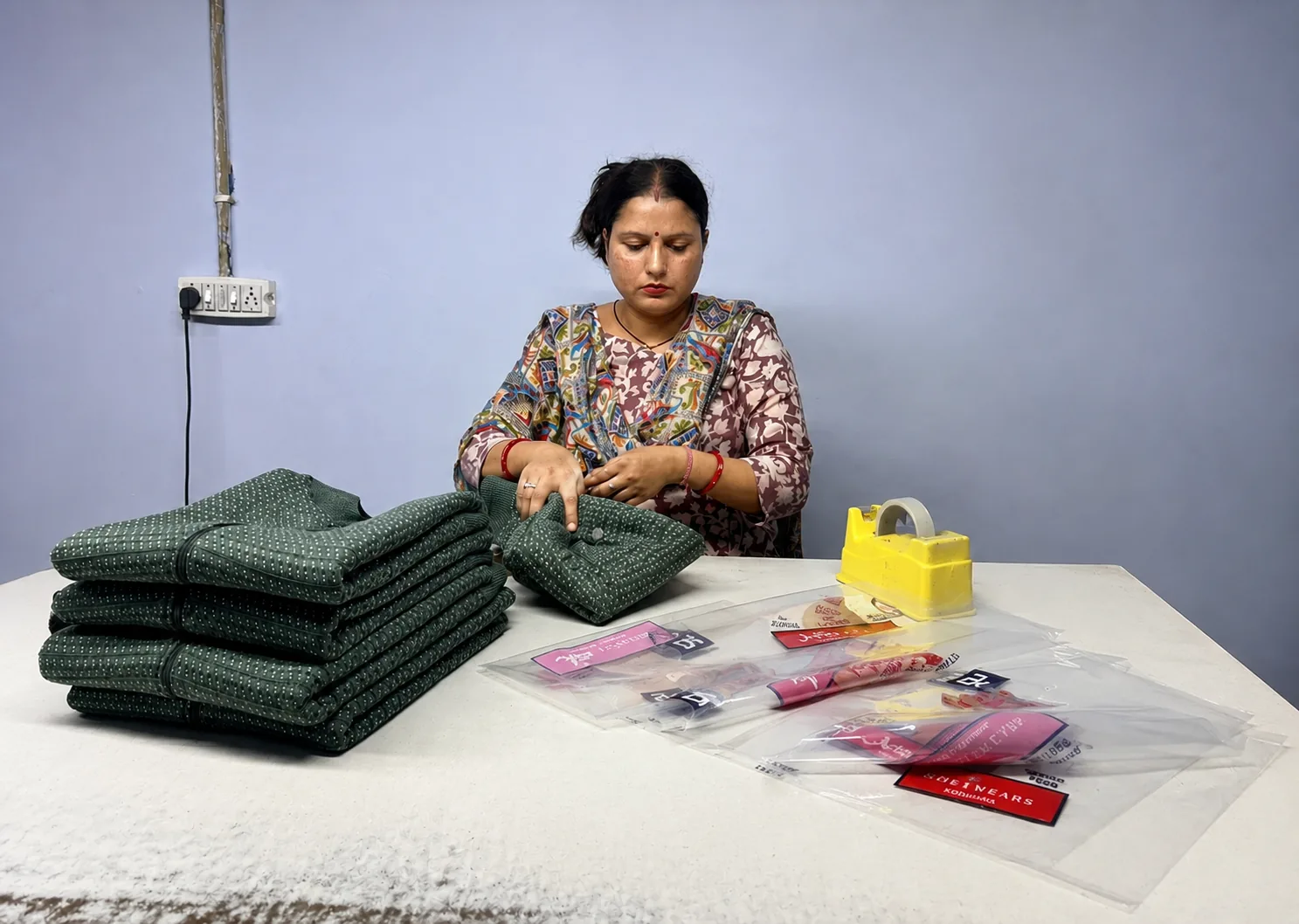
Packaging
QC-approved garments are folded, poly-bagged, and packed to client specification. For private-label orders, we apply custom hang-tags, price labels, and branded packaging before boxing. Finished orders are packed, labelled, and prepared according to the client's requirements.
Every shipment is documented with a packing list and quality declaration. We maintain records for six months, allowing any post-delivery query to be traced back to the production batch.